研究カテゴリー: ストレスプロファイルとストレス反応<研究カテゴリー>

  • Psychophysiological Mesures in Stress Assessment and Biofeedback

    Various psychophysiological measures are used as clues to capture the dynamically changing state of the body, which is always in flux. In psychosomatic medical evaluation, treatment, and research, the following psychophysiological indicators are used as easy-to-capture measures of dynamically changing states:

    These indicators change sensitively not only with physical but also with psychological and behavioral states (mind-body correlation). Specifically, they are used in psychosomatic medicine for Psychophsiological Stress Profiles and biofeedback.

    Significance of Psychophysiological Measurement in Psychosomatic Medicine

    In psychosomatic disorders or functional somatic syndromes, the pathology may not be adequately captured by conventional medical examinations alone.

    For example, in “functional dyspepsia (FD)”, no abnormalities are found in gastroscopy, but symptoms such as epigastric pain due to abnormalities in gastric motility lead to a decrease in quality of life. In capturing such pathologies, methods such as gastric fluoroscopy to observe gastric motility are available. Another approach involves evaluating the relationship between the functioning of the autonomic nervous system that governs gastric motility and psychological states.

    Psychophysiological indicators “visualize” such invisible functional changes in real time. By “visualizing” and “objectifying,” it becomes easier to capture functional pathologies, understand the mind-body correlation related to stress, and lead to insights that contribute to psychosomatic medical approaches.

    List of Psychophysiological Measures

    Psychophysiological MesuresOverview
    1) Electromyography (EMG)
    <Observing muscle tension/relaxation>
    In today’s stressful lifestyles, sustained muscle tension contributes to problems such as shoulder stiffness, headaches, lower back pain, and chronic pain. This indicator captures the degree of muscle tension and relaxation involved in such pathologies.
    2) Skin Conductance Level (SCL)
    <Observing emotional sweating>
    Among sweating, palmar sweating is central and responds to emotional changes. Lie detectors utilize this and are sensitive to psychological agitation. It captures the level of arousal, psychological agitation/stability, tension/relaxation, etc.
    3) Skin Temperature (TEMP)  
    <Observing skin temperature>
    Skin temperature is constantly changing due to factors such as peripheral vasodilation and constriction. Stress causes peripheral blood vessels to constrict, leading to poor circulation and decreased skin temperature. Skin temperature captures changes in peripheral circulation according to such situations and is also important as an indicator of relaxation, such as in autogenic training.
    4) Blood Volume Pulse (BVP)  
    <Observing peripheral blood vessel constriction/dilation>
    With fingertip plethysmography, it directly captures changes in peripheral blood vessels along with skin temperature. Also, it can determine heart rate from pulse waves, allowing heart rate to be captured without electrocardiography.
    5) Respiration (RESP)  
    <Observing breathing pattern/depth/speed>
    Respiration is key to various bodily regulation methods and serves as a point of contact between consciousness and unconsciousness. By capturing respiration, various states of mind and body can be inferred.
    6) Electrocardiography (EKG)  
    <Observing heart function>  
    The heart is the source of bodily activity and rhythm. Its function changes significantly not only with physical but also with psychological states. Biofeedback mainly captures heart rate and heart rate variability. Heart rate is the source of biological rhythms and is also a comprehensive indicator of autonomic nervous system tension/relaxation, as is often described as “palpitating” when stressed.
    7) Heart Rate Variability (HRV)  
    <Indicator of autonomic nervous system function>
    Heart rate variability is one of the most studied indicators as it objectively captures autonomic nervous system function. From heart rate variability, you can evaluate the degree of autonomic nervous system tension, flexibility of adaptation, and balance between sympathetic and parasympathetic nervous systems.

    (Kanbara K, LABs Psychosomatic Medicine, https://bodythinking.net/en/research/parameter, July 2022)

  • Risk Factors for the Onset of Stress-Related Diseases

    In today’s rapidly advancing and highly digitized society, driven by Social Media (SNS) and AI, humanity is facing stress situations that are more complex and surpass the assumptions of “humans” as biological beings than ever before.

    In addition, since the onset of the COVID-19 pandemic in 2019, humanity has been under significant threat, with many people still suffering from its aftermath. Although there has been some respite, we have been subjected to significant upheavals both mentally and physically, and it can be said that these stressful conditions persist.

    Amidst such circumstances, the proportion of stress-related disorders such as functional somatic syndromes and psychosomatic illnesses, as well as chronic diseases like lifestyle-related diseases, is increasing. In these conditions, the relationship between so-called “stress” or, in more rigid terms, “psychosocial factors,” and the pathogenesis of these diseases is not a one-to-one correspondence but a non-linear and complex system. Hence, objective evaluation becomes challenging.

    This study utilizes data from stress assessments conducted in outpatient psychosomatic clinics to

    • Determine which stress factors are involved in the onset and pathogenesis of stress-related disorders.
    • Identify factors contributing to the deterioration of quality of life (QOL) and social functions such as work and household tasks.
    • Investigate whether combinations or patterns of multiple factors rather than a single factor are involved and, if so, determine which combinations or patterns affect these conditions.
    • Explore factors contributing to the exacerbation of not only stress-related disorders such as psychosomatic illnesses but also common chronic physical diseases like lifestyle-related diseases.

    from the perspective of psychosomatic medicine.

    Research Objectives

    The objectives of this research are to elucidate the pathophysiology of stress responses in stress-related disorders, clarify the degree of involvement and relationships of risk factors in onset, establish therapeutic strategies for stress-related disorders, and aim to prevent onset through stress management and lifestyle adjustments.

    Through these objectives, we seek ways to navigate the aforementioned stress society with both mental and physical health.

    Research Methods: Data Science Approaches

    For the analysis of such multivariate, multi-level, and relatively large datasets, approaches based on data science, including recent advancements in machine learning, deep learning, and AI, are crucial.

    Our department has collaborated with medical institutions and related departments to conduct stress assessments in outpatient psychosomatic clinics for patients with stress-related disorders such as psychosomatic illnesses and functional somatic syndromes, as well as healthy individuals serving as controls.

    These stress assessments combine stress response profiles of physiological indicators spanning multiple systems with symptoms, disease severity, social functioning such as work, psychological assessments, and QOL, termed Psychophysiological Stress Profile (PSP) (Kanbara et al., Psychosomatic Medicine, 2005; Kanbara et al., Psychosomatic Medicine, 2007). Data collection is ongoing alongside outpatient care.

    Using this database, which includes multivariate data on physiological stress responses, psychological assessments, and clinical information, we are implementing or considering the following methods:

    • Identifying stress response patterns specific to stress-related disorders and combinations of psychological and epidemiological factors using large-scale data analysis methods, including machine learning.
    • Creating a model of risk factors for the onset of stress-related disorders based on these stress-related factor patterns.
    • Applying the model to new subjects to validate its validity.
    • Considering clinical applications such as disease risk prediction based on the model.
    • Establishing preventative strategies for stress-related disorders based on the model.

    Research Prospects: Turning Stress into Life’s Spice

    Despite living in the complex stress society mentioned earlier, humans possess the inherent ability to adapt to stress situations and turn stress into a spice of life. Just like in cooking, spices can be overwhelming if used in excess but are indispensable in moderation. This adaptive function is also referred to as allostasis.

    We aim to elucidate how to turn stress into life’s spice using the power of data science and explore the wisdom to navigate through today’s post-COVID and anxious era from a psychosomatic perspective.

    (LABs Psychosomatic Medicine, https://bodythinking.net/en/research/stress-disease, May, 2023)

    Related Projects

    An investigation into pattern analysis of physiological stress responses and the construction of clinical stress response models using machine learning
    https://kaken.nii.ac.jp/ja/grant/KAKENHI-PROJECT-20K03462/
    [2020-2024 Grant-in-Aid for Scientific Research (C)]

    An examination of pathophysiology using psychophysiological and psychological assessments in functional somatic syndromes
    https://kaken.nii.ac.jp/ja/grant/KAKENHI-PROJECT-22570228/
    [2010-2012 Grant-in-Aid for Scientific Research (C)]

  • Psychophysiological Stress Profile

    In modern society, the impact of stress on the mind and body is becoming increasingly significant, and in the medical field, the proportion of stress-related disorders such as psychosomatic disorders, lifestyle diseases, and functional disorders is increasing year by year. In these disorders, stress (psychosocial factors) plays a complex and chronic role in the pathophysiology, making treatment with conventional methods such as medication alone difficult.

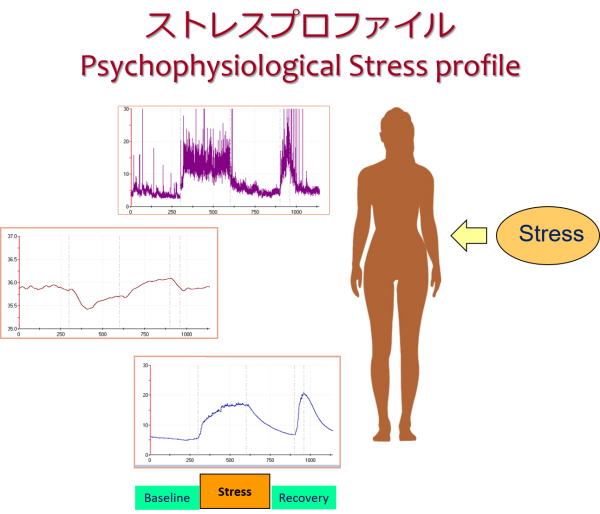
    The Psychophysiological Stress Profile (PSP) is a method of psychosomatic medical assessment that examines how the physiological functions of the body respond to stress, taking into account the mind-body relationship.

    Physiological Response to Stress

    When stress occurs, the body responds in a variety of ways to cope. These stress responses are important for maintaining our mental and physical health.

    • Tension in the sympathetic nervous system (e.g., increased sweating and heart rate)
    • Increases in stress hormones (e.g., cortisol and amylase)
    • Changes in immune function (e.g., natural killer cells)

    These functions keep us healthy even under stress. Among them, the physiological responses centered on the function of the autonomic nervous system are rapid and constantly changing, making them easy to understand. It is said that there are individual characteristics of these changes that are influenced by factors such as the stress situation at the time.

    Stress Profile

    The Psychophysiological Stress Profile examines physiological indicators of several systems, such as the autonomic nervous system and muscle tension, as well as the recovery process from stress similar to mental work stress in daily work, and examines the relationship with subjective bodily sensations and psychological tests.

    Normally, stress triggers the following responses:

    • Increased emotional sweating (sweaty palms)
    • Peripheral blood vessels constrict and skin temperature decreases (fingertips become cold)
    • Heart rate increases (heart pounding)
    • Muscle tension increases

    Emotional indicators may be exaggerated, while vascular responses may be diminished, and recovery from stress may be delayed.

    Thus, the Stress Profile evaluates individual response patterns and the stress situation at that time.

    Stress Profile in Stress-related Disorders

    Research has shown that stress responses in stress-related disorders differ from those in healthy individuals. For example, a pattern of consistently low responses compared to healthy individuals suggests a transition to a pathological state, termed allostatic load. Such low-response patterns are a significant characteristic of stress-related disorders. Additionally, patterns of excessively high responses or delayed recovery from responses have also been identified.

    From these response patterns, we are evaluating the pathophysiology of stress-related disorders and considering appropriate psychosomatic approaches.

    So why do stress responses, originally intended to maintain health, change in stress-related disorders? The stress responses inherent in our bodies are presumed to be necessary when fighting or fleeing from enemies (sympathetic nervous system function), and to recover when not in such situations (parasympathetic nervous system function). However, in modern stress situations without clear boundaries between day and night or on and off, the balance and switching of the sympathetic and parasympathetic nervous systems are disrupted.

    Such situations persist chronically, causing individuals to exhibit stress responses different from those of healthy individuals, eventually leading to stress-related disorders.

    Related Projects
  • Stress response pattern of heart rate variability in patients with functional somatic syndromes

    Our recent publication, “Stress response pattern of heart rate variability in patients with functional somatic syndromes,” investigates the intricate dynamics of heart rate variability (HRV) during mental arithmetic stress in individuals with Functional Somatic Syndromes (FSSs).

    The study unveils a distinct “flat” vagal stress response in severe FSS patients, providing critical insights into their altered physiological state compared to healthy controls. These findings not only contribute to a deeper understanding of FSS pathophysiology but also open avenues for potential diagnostic and therapeutic interventions based on stress response patterns. Read the full article here.

    Saka-Kochi, Y., Kanbara, K., et al. Appl Psychophysiol Biofeedback (2023).
    https://doi.org/10.1007/s10484-023-09608-z

    Summary

    Study Objective

    • Explore HRV stress response patterns in Functional Somatic Syndromes (FSSs) during mental arithmetic stress, comparing them with healthy controls.
    • Evaluate autonomic pathophysiology, focusing on reduced HRV in stress-related FSSs.
    • Address the unclear understanding of autonomic stress response patterns in FSSs.

    Major Findings

    • Severe FSS patients display an altered “flat” vagal stress response, maintaining low HRV throughout relaxation, stress, and post-stress, contrasting with the pronounced stress response and recovery in healthy controls.
    • FSS patients show elevated mood questionnaire scores, prolonged illness duration, and reduced daily functionality compared to controls.
    • The study suggests the potential diagnostic and therapeutic relevance of altered stress response patterns in FSSs, shedding light on the stress-illness relationship.

    Significance and Implications

    • Emphasizes assessing both stress reactions and recovery processes for a comprehensive understanding of FSS patients’ physiological status.
    • Contributes to developing diagnostic and therapeutic approaches for FSSs, highlighting the dynamic changes in autonomic function induced by stress.
    • Offers valuable insights into the shared pathophysiological mechanisms of FSSs and their connection to stress, paving the way for further exploration of stress-related diseases.

    Methods

    Study Participants, Diagnostic Criteria and Classification

    • Cross-sectional case-control study involving 79 patients (13-74 years) diagnosed with FSS and 39 healthy controls.
    • FSS diagnoses were based on three criteria: somatic symptoms without organic or psychiatric explanation, subjective-symptom rating score >3/10 lasting >6 months, and symptoms causing difficulties in social or daily activities (GAF score < 80).
    • Patients with FSS were categorized into five groups based on diagnoses, including fibromyalgia syndrome/chronic fatigue syndrome, functional gastrointestinal disorders, chronic pain, musculoskeletal disorders, and others.

    Physiological Measurements and Data Processing

    • Heart rate variability (HRV) parameters, mean inter-beat interval (IBI), low frequency power (HRV-LF), high frequency power (HRV-HF), were measured during three periods: baseline, mental arithmetic stress task, and post-stress recovery (5 min. each, total 15 min).
    • HRV parameters were analyzed using the Kubios HRV software (KUBIOS OY), and mood assessments were conducted using the Profile of Mood States (POMS) test.

    Findings

    • Patients with FSS exhibited significantly lower HRV parameters (IBI, HRV-LF, HRV-HF) compared to healthy controls during baseline, stress, and post-stress periods.
    • FSS group displayed a “flat” stress response with lower HRV-HF at baseline, reduced stress response, and no post-stress recovery, in contrast to healthy controls.
    • The reactive stress response pattern of HRV-LF was observed in the FSS group, indicating chronic vagal dysfunction possibly linked to an exaggerated sympathetic stress response.
    • The control group showed typical stress response patterns with decreased HRV during stress and subsequent recovery, while the FSS group displayed abnormal patterns as above.
    • These findings provide an overview of the stress response patterns in patients with a severe spectrum of FSS.
    changes in the LF and HF components of heart rate variability (HRV) before and after mental arithmetic stress in individuals with Functional Somatic Syndromes (FSS, n = 79) and healthy controls (n = 39).

    Figure illustrates changes in the LF and HF components of heart rate variability (HRV) before and after mental arithmetic stress in individuals with Functional Somatic Syndromes (FSS, n = 79) and healthy controls (n = 39).

    The LF (low frequency) and HF (high frequency) box-and-whisker plots compare HRV between control and FSS groups. Each box represents the middle 50% of the data, with the line inside indicating the median. Whiskers depict the range of values within a specified limit. HRV: heart rate variability; LF: low frequency; HF: high frequency; FSS: functional somatic syndrome; Baseline: relaxation baseline.

    Discussion

    Stress Response Patterns of HRV in FSS

    • Patients with severe FSS exhibited a unique “flat” vagal stress response pattern compared to healthy controls.
    •   While healthy controls demonstrated a pronounced stress response pattern with a significant decrease and subsequent recovery in HRV-HF, the FSS group displayed a diminished stress response, and no recovery was observed.
    • In contrast to the flattened pattern in HRV-HF, patients with FSS displayed a reactive stress response pattern in HRV-LF, marked by a significant increase during stress and subsequent recovery, differing from the control group.
    • The study suggests a chronic vagal dysfunction, possibly rooted in an exaggerated sympathetic stress response, in patients with severe FSS, representing a novel finding in stress response patterns.

    Clinical Implications and Insights

    • Significance of altered stress response patterns in severe FSS for diagnosis and treatment, offering potential biomarkers for assessing disease severity.
    • Proposed a hypothesis that the vagal stress response pattern evolves with the duration of illness, connecting prolonged distress to lower and flatter HRV-HF.
    • Limitations, suggesting the need for future multi-center studies, longitudinal interventions, and extended recovery periods to delve deeper into the complexities of HRV patterns in FSSs.

    This work was supported by JSPS KAKENHI Grant Number 20K03462.

    (Kanbara K, et al. 2020-2023 “Pattern analysis of physiological stress response using machine learning and construction of clinical model of stress response.”)

  • Stress response pattern of heart rate variability in patients with functional somatic syndromes

    Our recent publication, “Stress response pattern of heart rate variability in patients with functional somatic syndromes,” investigates the intricate dynamics of heart rate variability (HRV) during mental arithmetic stress in individuals with Functional Somatic Syndromes (FSSs).

    The study unveils a distinct “flat” vagal stress response in severe FSS patients, providing critical insights into their altered physiological state compared to healthy controls. These findings not only contribute to a deeper understanding of FSS pathophysiology but also open avenues for potential diagnostic and therapeutic interventions based on stress response patterns. Read the full article here.

    Saka-Kochi, Y., Kanbara, K., et al. Appl Psychophysiol Biofeedback (2023).
    https://doi.org/10.1007/s10484-023-09608-z

    Summary

    Study Objective

    • Explore HRV stress response patterns in Functional Somatic Syndromes (FSSs) during mental arithmetic stress, comparing them with healthy controls.
    • Evaluate autonomic pathophysiology, focusing on reduced HRV in stress-related FSSs.
    • Address the unclear understanding of autonomic stress response patterns in FSSs.

    Major Findings

    • Severe FSS patients display an altered “flat” vagal stress response, maintaining low HRV throughout relaxation, stress, and post-stress, contrasting with the pronounced stress response and recovery in healthy controls.
    • FSS patients show elevated mood questionnaire scores, prolonged illness duration, and reduced daily functionality compared to controls.
    • The study suggests the potential diagnostic and therapeutic relevance of altered stress response patterns in FSSs, shedding light on the stress-illness relationship.

    Significance and Implications

    • Emphasizes assessing both stress reactions and recovery processes for a comprehensive understanding of FSS patients’ physiological status.
    • Contributes to developing diagnostic and therapeutic approaches for FSSs, highlighting the dynamic changes in autonomic function induced by stress.
    • Offers valuable insights into the shared pathophysiological mechanisms of FSSs and their connection to stress, paving the way for further exploration of stress-related diseases.

    Methods

    Study Participants, Diagnostic Criteria and Classification

    • Cross-sectional case-control study involving 79 patients (13-74 years) diagnosed with FSS and 39 healthy controls.
    • FSS diagnoses were based on three criteria: somatic symptoms without organic or psychiatric explanation, subjective-symptom rating score >3/10 lasting >6 months, and symptoms causing difficulties in social or daily activities (GAF score < 80).
    • Patients with FSS were categorized into five groups based on diagnoses, including fibromyalgia syndrome/chronic fatigue syndrome, functional gastrointestinal disorders, chronic pain, musculoskeletal disorders, and others.

    Physiological Measurements and Data Processing

    • Heart rate variability (HRV) parameters, mean inter-beat interval (IBI), low frequency power (HRV-LF), high frequency power (HRV-HF), were measured during three periods: baseline, mental arithmetic stress task, and post-stress recovery (5 min. each, total 15 min).
    • HRV parameters were analyzed using the Kubios HRV software (KUBIOS OY), and mood assessments were conducted using the Profile of Mood States (POMS) test.

    Findings

    • Patients with FSS exhibited significantly lower HRV parameters (IBI, HRV-LF, HRV-HF) compared to healthy controls during baseline, stress, and post-stress periods.
    • FSS group displayed a “flat” stress response with lower HRV-HF at baseline, reduced stress response, and no post-stress recovery, in contrast to healthy controls.
    • The reactive stress response pattern of HRV-LF was observed in the FSS group, indicating chronic vagal dysfunction possibly linked to an exaggerated sympathetic stress response.
    • The control group showed typical stress response patterns with decreased HRV during stress and subsequent recovery, while the FSS group displayed abnormal patterns as above.
    • These findings provide an overview of the stress response patterns in patients with a severe spectrum of FSS.
    changes in the LF and HF components of heart rate variability (HRV) before and after mental arithmetic stress in individuals with Functional Somatic Syndromes (FSS, n = 79) and healthy controls (n = 39).

    Figure illustrates changes in the LF and HF components of heart rate variability (HRV) before and after mental arithmetic stress in individuals with Functional Somatic Syndromes (FSS, n = 79) and healthy controls (n = 39).

    The LF (low frequency) and HF (high frequency) box-and-whisker plots compare HRV between control and FSS groups. Each box represents the middle 50% of the data, with the line inside indicating the median. Whiskers depict the range of values within a specified limit. HRV: heart rate variability; LF: low frequency; HF: high frequency; FSS: functional somatic syndrome; Baseline: relaxation baseline.

    Discussion

    Stress Response Patterns of HRV in FSS

    • Patients with severe FSS exhibited a unique “flat” vagal stress response pattern compared to healthy controls.
    •   While healthy controls demonstrated a pronounced stress response pattern with a significant decrease and subsequent recovery in HRV-HF, the FSS group displayed a diminished stress response, and no recovery was observed.
    • In contrast to the flattened pattern in HRV-HF, patients with FSS displayed a reactive stress response pattern in HRV-LF, marked by a significant increase during stress and subsequent recovery, differing from the control group.
    • The study suggests a chronic vagal dysfunction, possibly rooted in an exaggerated sympathetic stress response, in patients with severe FSS, representing a novel finding in stress response patterns.

    Clinical Implications and Insights

    • Significance of altered stress response patterns in severe FSS for diagnosis and treatment, offering potential biomarkers for assessing disease severity.
    • Proposed a hypothesis that the vagal stress response pattern evolves with the duration of illness, connecting prolonged distress to lower and flatter HRV-HF.
    • Limitations, suggesting the need for future multi-center studies, longitudinal interventions, and extended recovery periods to delve deeper into the complexities of HRV patterns in FSSs.

    This work was supported by JSPS KAKENHI Grant Number 20K03462.

    (Kanbara K, et al. 2020-2023 “Pattern analysis of physiological stress response using machine learning and construction of clinical model of stress response.”)

  • ストレス 関連疾患 発症リスク要因の心身医学的検討

    ソーシャルメディア (SNS) AI などにより、急速かつ高度に情報化された社会において、人類はその史上、これまで経験していないくらい複雑で、生物としての「ヒト」の想定を超えるような ストレス 状況にさらされています。

    それに加えて、2019年からのコロナパンデミック(COVID-19)は、人類に大きな脅威をもたらし、後遺症によって苦しむ人もまだまだ後を絶ちません。一段落ついたとはいえ、私達は心身ともに大きなゆさぶりを余儀なくされ、今なおそのストレス状況は続いているといえるでしょう。

    そのような状況の中、機能性疾患や心身症をはじめとするストレス関連疾患や、生活習慣病などの慢性疾患の比重が増加しています。これらの疾患では、いわゆる 「ストレス」 、もう少し固い言葉では「心理・社会的因子」といわれる要因と、それら疾患の病態の関係は、一対一対応ではない非線形かつ複雑なシステムであるため、客観的評価が困難です。

    本研究では、これまでの心療内科外来でのストレスアセスメントのデータベースを用いて、

    • どのようなストレス要因が、ストレス関連疾患の発症や病態により関与するのか?
       <疾患発症や維持・増悪のリスク要因・予測因子は何か>
    • QOL(生活の質)や仕事や家事など、社会機能の低下に関与するのはどのような因子か?
       <QOLや社会機能低下のリスク要因・予測因子は何か>
    • 一つの要因ではなく複数の要因の組み合わせやパターンが関与するのではないか?
      どのような因子の組み合わせやパターンが影響するのか?
    • 心身症などのストレス関連疾患だけでなく、生活習慣病など一般的な慢性身体疾患の増悪に関与する要因は何か?

    といったリサーチクエスチョンについて、心身医学の観点から検討を重ねています。

    研究の目的

    本研究の目的は、①ストレス関運疾患におけるストレス反応の病態を明らかにし、②発症リスク要因の関与の度合いや関係性を解明すること。またそれによって、③ストレス関連疾患における治療的ストラテジーを確立し、④発症を予防するストレスマネージメントやライフスタイルの確立を目指すことです。

    これによって、上述のストレス社会を心身ともに健康に乗り切る方法を模索しています。

    研究の方法:データサイエンスによる検討

    このような多変量、多層レベル、比較的大量のデータの解析については、近年の 機械学習、深層学習やAIなどによる データサイエンス に基づく解析が重要です。

    当講座では、関運医療機関や関連講座と運携し、心療内科外来におけるストレス評価を、心身症や機能性疾患などのストレス関連疾患患者及び対照としての健常人に対して行ってきました。

    このストレス評価は、複数の系統にまたがる生理指標のストレス反応のプロファイルと、症状、罹病期閻、仕事など社会機能の程度、心理的評価やQOLなどを組み合わせたもので、
    「精神生理学的ストレスプロファイル」[Psychophysiological Stress Profile: (PSP)]神原ほか,心身医学,2005; Kanbara et al., Psychosomatic Medicine, 2007)と呼んでいます。
    現在も外来診療と併せてデータを蓄積し続けています。

    このデータベース<生理的ストレス反応と心理評価や臨床情報の多変量データ>を用いて、以下のような方法を実施もしくは検討しています。

    • 機械学習を含めた大規模データ解析の手法により、ストレス関連疾患に特徴的なストレス反応バターンや、心理・疫学的因子の組み合せを特定する。
    • それらのストレス関連因子のバターンから、ストレス関連疾患発症リスク要因モデルを作成する。
    • 新たな対象にそのモデルを適用し、モデルの妥当性を検証する。
    • モデルの疾患リスク予測などの臨床応用を検討する。
    • モデルをもとに、ストレス関運疾患の予防的ストラテジーの確立を目指す。

    研究の展望: ストレス を人生のスパイスに

    今日は、冒頭で述べたような複雑なストレス社会ではありますが、人間にはストレス状況に適応し、ストレスを人生のスパイスにする力が本来備わっています。料理において、スパイスは量を間違えると大変ですが、適度であれば欠かせません。このような適応的な働きをアロスタシスとも呼ばれます。

    ストレスを人生のスパイスにする方法を、データサイエンスの力を使って明らかにし、今日のポストコロナや不安の時代を乗り切る智慧を、心身医学的に探っていきたいと思います。

    (Psychosomatic Labo, https://bodythinking.net/research/stress-disease, May, 2023)

    関連プロジェクト

    機械学習を用いた生理的ストレス反応のパターン分析と臨床的ストレス反応モデルの構築
    https://kaken.nii.ac.jp/ja/grant/KAKENHI-PROJECT-20K03462/
    [2020-2024 科学研究費補助金基盤研究C]

    機能性身体症候群における精神生理学的評価と心理的評価を用いた病態の検討
    https://kaken.nii.ac.jp/ja/grant/KAKENHI-PROJECT-22570228/
    [2010-2012 科学研究費補助金基盤研究C]

  • ストレスプロファイル・バイオフィードバックで用いられる 精神生理学的指標

    常に変化している、動的なからだの状態をとらえる手がかりとして、さまざまな 精神生理 学的な指標があります。心身医学的な評価・治療・研究では、ダイナミックに変化する状態の変化をとらえやすい指標として、以下のような 精神生理学的指標が用いられます。

    これらの指標は身体的状態だけでなく、心理的・行動的状態によっても鋭敏に変化します(心身相関)。具体的には、心療内科におけるストレスプロファイルバイオフィードバックで用いられています。

    心身医学での重要性

    心身症や機能性身体疾患では、通常の医学的検査のみでは十分に病態が捉えられない場合があります。

    例えば「機能性ディスペプシア(FD)」では、胃カメラでは異常が見つかりませんが、心窩部痛など胃運動の異常による症状のためにQOLが低下します。このような病態を捉える場合、胃の動きを胃透視などでみる方法もあります。もう一つは、その胃の動きをつかさどる自律神経の機能や心理的状態との関連を捉える評価があります。

    精神生理学的指標は、そのような目に見えない機能的変化を、リアルタイムに「見える化」します。「見える化」「客観化」することで、機能的病態を捉えやすくなり、ストレスとの関連など心身相関の病態を捉え、その気づきから、心身医学的アプローチにつながります。

    精神生理学的指標の一覧

    精神生理学的指標 概要
    1) 筋電図 (EMG)
    <筋肉の緊張・弛緩をみる>
    緊張が強いられる現代の生活では、持続的な筋緊張が関与する肩こり、頭痛、腰痛、慢性疼痛などが問題となっています。このような病態に関わる筋緊張やリラックスの度合いを捉えます。
    2) スキンコンダクタンス (SCL)
    <情動性発汗をみる>
    発汗の中でも手掌発汗は中枢性で、情動の変化に対応しています。ウソ発見器はこれを用いたもので、心理的な動揺でも鋭敏に変化します。覚醒の度合い、精神的な動揺/安定性、緊張/弛緩などを捉えます。
    3) 皮膚温 (TEMP)  
    <皮膚の温度をみる>
    末梢血管の収縮拡張などによって、皮膚温は常に変化しています。ストレスがかかると末梢の血管は収縮して循環が悪くなり、皮膚温は低下します。皮膚温はこのような状況に応じた末梢循環の変化を捉え、自律訓練法などのリラクセーションの指標としても重要です。
    4) 容積脈波 (BVP)  
    <末梢血管の収縮拡張をみる>
    指尖容積脈波計(plethysmograph)によって、皮膚温とともに、末梢血管の変化をより直接的に捉えます。また、脈波から脈拍数が分かり、心電図をつけなくても心拍数を捉えることができます。
    5) 呼吸 (RESP)  
    <呼吸のパターン・深さ・速さをみる>
    呼吸はさまざまな身体調整法の鍵となるものです。意識と無意識の接点でもあります。呼吸を捉えることで、心身のさまざまな状態を推定することができます。
    6) 心電図 (EKG)  
    <心臓の働きをみる>  
    心臓はからだの活動とリズムの源です。身体的な状態はもちろん、心理的な状態によってもその機能は大きく変化します。 バイオフィードバックでは主に心拍数と心拍変動を捉えます。心拍数は生体リズムの源で、緊張すると「ドキドキする」と言われるように、自律神経系の緊張/弛緩の総合的な指標でもあります。
    7) 心拍変動 (HRV)  
    <自律神経の機能の指標>
    心拍変動は自律神経機能を客観的に捉えたものとして、最も研究がなされている指標の一つです。心拍変動から、自律神経系の緊張の度合い、適応の柔軟性、交感神経・副交感神経のバランスなどを評価できます。

    (Psychosomatic Labo, https://bodythinking.net/research/parameter, July 2022)

  • ストレス プロファイル Psychophysiological Stress Profile

    現代の社会状況では、 ストレス の心身への影響がますます大きくなっており、医療においても、心身症、生活習慣病、機能性疾患など、ストレス関連疾患の比重が年々増加しています。これらの疾患では、ストレス(心理社会的因子)が複雑かつ慢性的に関与した病態を呈するため、薬など従来の方法だけでは治療が難しくなっています。

    「ストレスプロファイル (Psychophysiological Stress Profile: PSP)」 とは、 ストレス によって、身体の生理機能がどのように反応するかをみて、心身相関のアセスメントを心身医学的に行う方法です。

    ストレス に対する生理反応

    ストレスがかかると身体はそれに対応するため、さまざまな反応を起こします。
    このようなストレス反応は、我々の心身の健康を保つ上で重要なものです。

    • 自律神経の中の交感神経の緊張(発汗や心拍が速くなるなど)
    • ストレスホルモンの増加(コルチゾールやアミラーゼなど)
    • 免疫機能の変化(ナチュラルキラー細胞など)

    これらの働きのおかげで、ストレスがあっても我々は健康を維持しているのです。このうち、自律神経機能を中心とする生理的機能の反応は速く、刻々と変化するためわかりやすい。その変化のパターンには人による特徴<プロファイル>があるとされ、その上にそのときのストレス状況などが加わります。

    ストレス プロファイル

    ストレスプロファイルでは、日常の仕事などのストレスに近い<メンタルワークストレス>によって、自律神経系や筋緊張など、いくつかの系統の生理的指標の変化や、ストレスからの回復プロセスを調べ、自覚的な身体感覚や心理テストとの関係などを調べます。

    通常はストレスによって、次のような反応が起こります。

    • 情動性発汗が増加(手に汗を握る)
    • 末梢の血管が収縮し、皮膚温は低下(手の先が冷たくなる)
    • 心拍数は上昇(ドキドキする)
    • 筋緊張が高まる

    情動性の指標は反応が高いけど、血管の反応は低いなど、ある指標で過剰であったり、鈍かったり、ストレス後の回復が遅れたりします。

    このように、その人に特有の反応のパターンや、そのときのストレス状況を評価するのがストレスプロファイルです。

    ストレス関連疾患におけるストレスプロファイル

    これまでの研究から、ストレス関連疾患におけるストレス反応は、健常人と比べて異なったパターンがあることが分かってきました。たとえば、健康な人よりも反応が低いパターンが続くと、病的な状態に移行することが示唆されていて、アロスタティック負荷と言われます。このような低反応のパターンは、ストレス関連疾患の大きな特徴の一つです。これ以外にも、反応が高すぎるパターンや、反応からの回復が遅れるパターンなどが見出されている。

    このような反応パターンから、ストレス関連疾患の病態を評価するとともに、どのような心身医学的アプローチが適切かを検討しています。

    では、ストレス関連疾患において、本来は健康を維持するためのストレス反応が、なぜ変化してしまうのでしょうか。
    我々の身体に備わっているストレス反応は、敵と戦ったり逃げたりするときに必要な状態が想定されており(交感神経機能)、そうでないときは回復して次の活動に備えます(副交感神経機能)。しかし、現代のような昼夜・オンオフの境のないストレス状況では、交感・副交感神経の切り替えやバランスが崩れてしまうのです。

    このような状況が慢性的に続くことで、健康な人と異なったストレス反応を起こすようになり、ついにはストレス関連疾患につながってしまうと考えられます。

    関連プロジェクト